General Information
Figure 1 shows a freestanding steel carport.
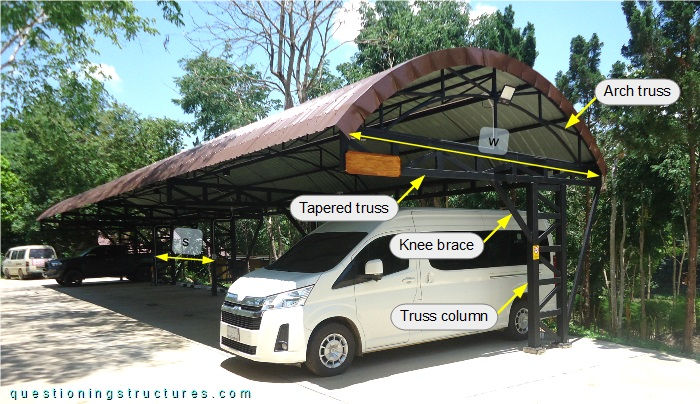
The steel structure consists mainly of truss columns, back-spanned tapered trusses, knee braces, arch trusses, longitudinal trusses, purlins, sag rods, and metal roofing sheets. The truss column spacing (s) and the roof width (w) are about 5 meters. The structural members are made of hollow sections (square, rectangular, and circular), circular sections (sag rods), and trapezoidal sheets.
Use of Resources
Figure 2 shows the carport.
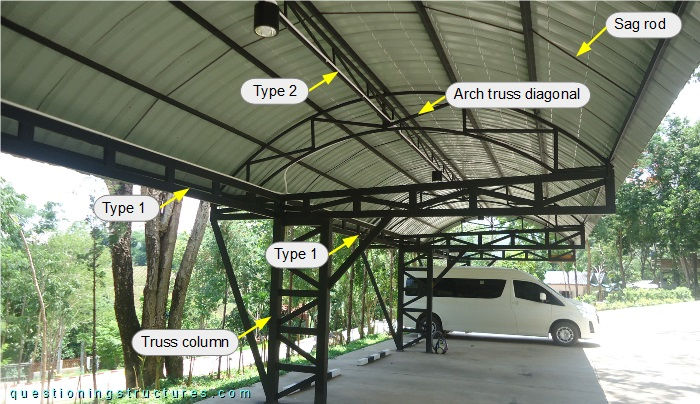
There are two longitudinal truss types (1 and 2); type 1 is placed between the tapered trusses over the truss columns, while type 2 is placed over the diagonals of the arch trusses and is continuous over the entire carport length. All trusses have diagonals, except for longitudinal truss type 1. Figure 3 shows a schematic lateral view of the carport.
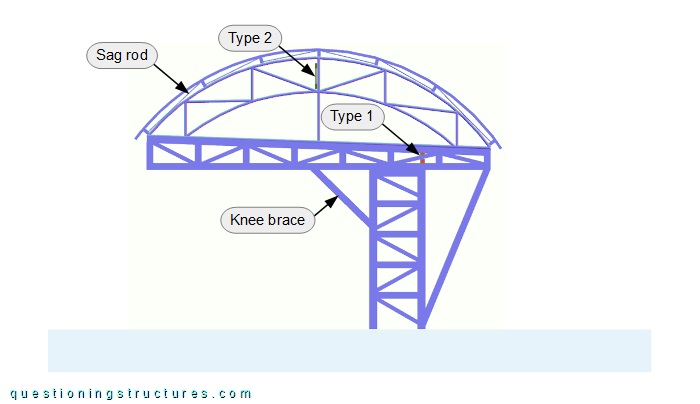
Figure 4 shows a schematic lateral view of the carport and an alternative variant.
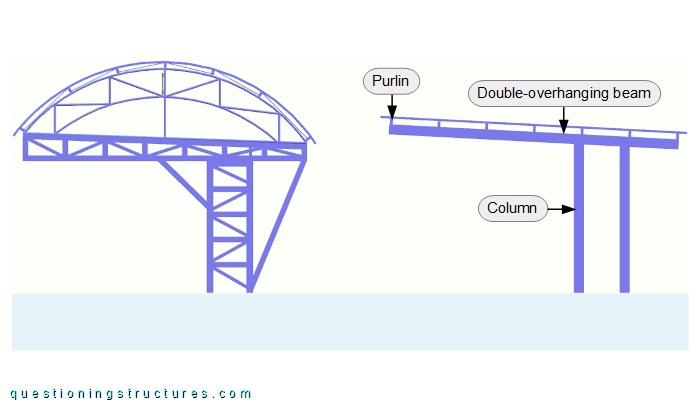
The main structure of the alternative variant consists of two columns and a double-overhanging beam made of H-sections; the purlins are made of rectangular hollow sections, and the cover is made of trapezoidal sheets.
What are some possible reasons to choose the original variant?
Which is the variant that probably uses fewer resources?