General Information
Figure 1 shows a pedestrian truss bridge.
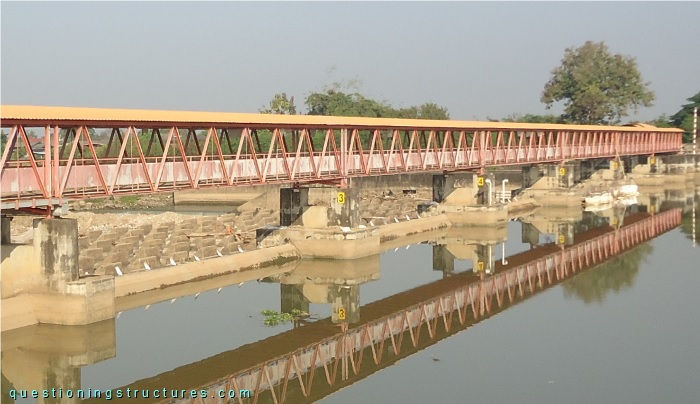
| Main span | ≅ 21 m |
| Type | Through-truss bridge |
| Truss material | Steel |
| Truss height | ≅ 2.5 m |
| Deck width | ≅ 2 m |
Vertical Members
Figure 2 shows a schematic three-dimensional view of a truss sector.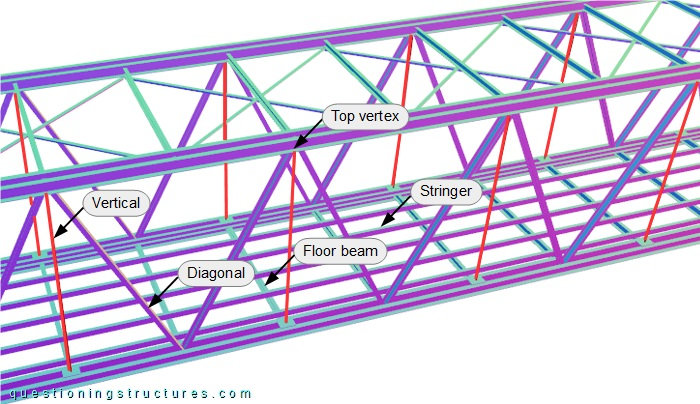
The web members consist of zig-zag diagonals, verticals (positioned on the top vertices only), and vertical end posts. The chords are made of two side-by-side placed U-sections with a gap, and the diagonals (made of U-sections) converge in the gap. The floor beams are placed on the bottom nodes and connected to the webs of the bottom chords, and the stringers are placed over the floor beams. The upper level arrangement consists of struts and plan braces. Figure 3 shows a truss sector.
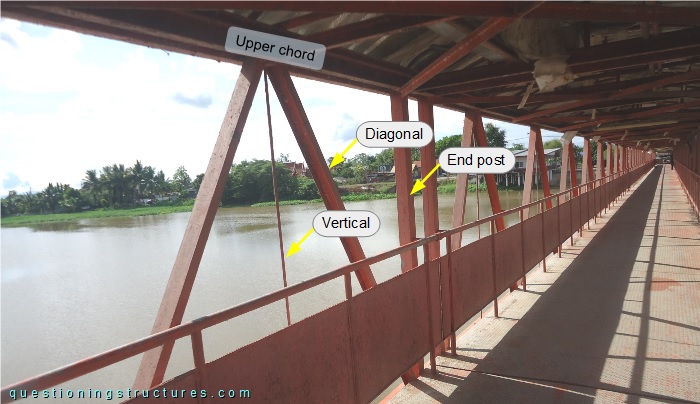
The verticals are made of steel rods and have a diameter of approximately 15 mm; the end posts are made of square hollow sections (built-up sections), and the trusses are non-continuous. Figure 4 shows the connection between the verticals and the upper chords.
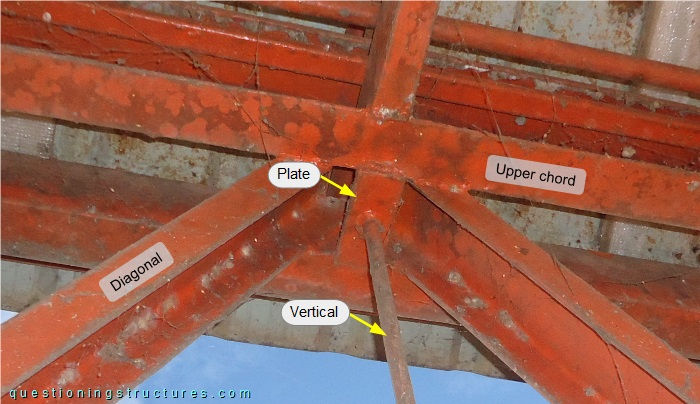
The vertical is connected to the upper chord by a steel plate (weld connections). The same connection type is also used for the bottom chords, as shown in figure 5.
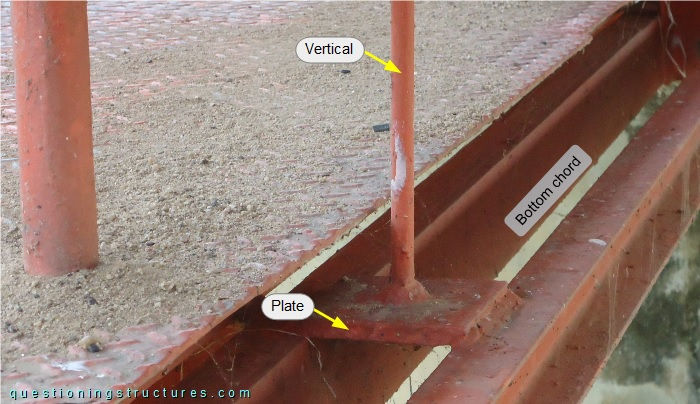
Figure 6 shows a schematic lateral view of the truss and the same trusss without verticals.
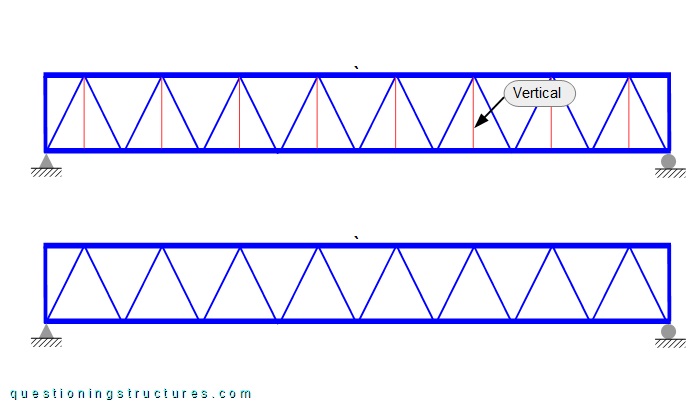
Can the verticals be neglected without changing the sizes of the truss members?
For the above shown pedestrian bridge, which is the truss type that probably uses fewer resources?